
"Best Hitting Mat for Golf Simulator (2026): 5 Picks Ranked by Feel "

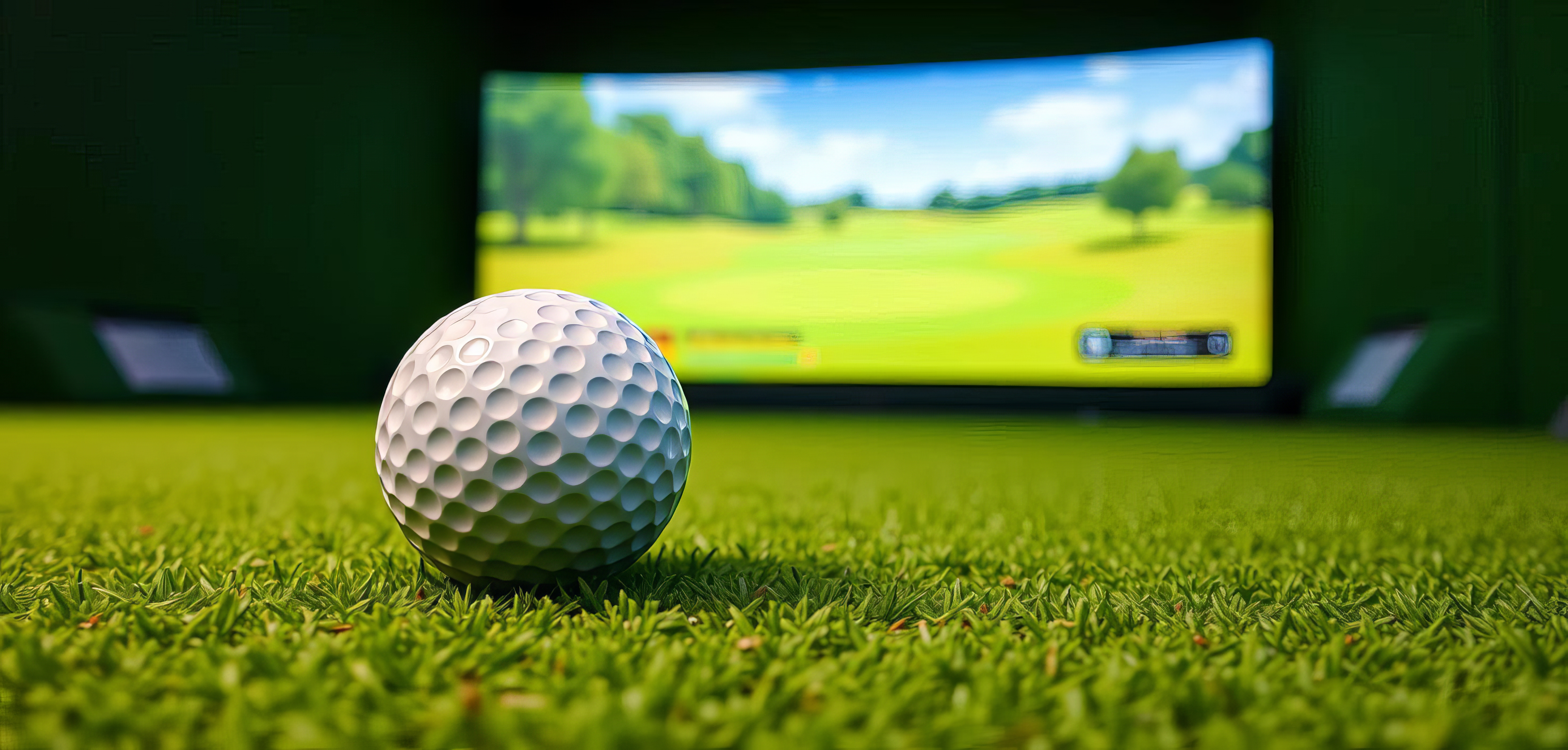
Best Hitting Mat Golf Simulator (2026): Protect Your Joints and Accuracy
As you finish your build, the hitting mat is the one component you physically feel on every shot. But choosing the best hitting mat golf simulator setup is not just about joint health. Cheap turf can actually distort club data on optical camera-based launch monitors that read impact directly off the surface.
Here are four ranked picks by budget and feel, a size guide based on launch monitor type, and when DIY works. Start with the premium baseline first.
1. Country Club Elite: Best Hitting Mat Golf Simulator for Fairway Feel
If you practice on a cheap mat, your joints will pay the price within a week. The Country Club Elite, commonly called the CCE, is the industry baseline for a premium, heavy-duty build. It uses dense, long-fiber nylon turf designed to mimic the resistance of a real, tightly mowed fairway.
Feel and Divot Interaction
The CCE uses dense fibers that let you hit down and through the ball, providing realistic feedback that instantly punishes fat shots by killing clubhead speed. But remember: this is synthetic turf over a heavy rubber base, not real soil. If you hit deep or fat, the mat will not give way like real grass, and that impact force travels straight up your shaft.
Optical Monitor Considerations
A major benefit of the CCE is how it behaves with camera-based launch monitors like the Bushnell Launch Pro, Foresight GC3, or SkyTrak+. These systems sit on the ground and read club delivery directly off the hitting surface. Cheap turf slips underfoot or reflects light, which distorts club path and face angle data. The CCE provides a highly stable, non-reflective matte background that keeps optical tracking highly accurate.
Thickness and Height Planning
At roughly 1.75 inches thick, the CCE is a heavy beast. This height means you must plan your setup geometry carefully. Your launch monitor needs to sit at the exact same height as the ball, meaning you must build a leveling platform or buy leveling feet. That 1.75-inch height also raises your stance, which you must factor into your ceiling height calculations and the bottom gap of your impact screen.
Noise and Durability
The heavy rubber backing excels at sound dampening. It muffles the thud of club-on-ground impact, making it a smart choice for basement builds directly below living areas. While the turf is highly durable, hitting from the exact same spot for two years will create a wear spot. Because the standard CCE is not modular, you cannot just swap out a cheap insert; you must rotate the entire mat to extend its life.
The Honest Weakness
The primary tradeoff is its extreme firmness. If you have a steep angle of attack or a history of tendinitis, high-volume practice on this mat can cause joint issues. At roughly $500 to $600 for a standard 5x5-foot size, replacing the entire mat because of a single worn hitting strip is a costly downside compared to modular insert systems.
- Buy it if: You are a sweep-style swinger who wants a realistic, non-slip fairway feel that punishes fat shots and provides a reliable background for optical launch monitors.
- Skip it if: You are a steep digger, have a history of wrist or elbow pain, or want a modular mat with cheap replaceable inserts.
2. Fiberbuilt Grass Series and Player Preferred: Best Hitting Mat Golf Simulator for Joint Protection
If you practice daily or have a steep swing, your biggest worry is not turf wear. It is elbow tendinitis. Fiberbuilt is the gold standard for joint protection, pairing a heavy-duty modular rubber base with a dedicated, replaceable hitting strip. It is the mat of choice for high-volume commercial fitting bays and home setups where joint health is the priority.
The Feel Split: Grass Series vs. Player Preferred
Before buying, you must understand the feel split between their two distinct turf styles. Buying the wrong style will completely throw off your indoor practice.
The Grass Series is the classic bristle design. It uses stiff, closely packed nylon bristles that let the club glide straight through with virtually zero shock. This is incredibly easy on your wrists, but the tradeoff is a floaty feel. The bristles can glide too easily, masking fat shots and giving you overly generous feedback.
The Player Preferred series mimics a dense fairway using a proprietary vibration-dampening layer under realistic turf. It provides highly accurate strike feedback and realistic launch data. However, it is noticeably firmer than the Grass Series and will still transfer some shock to sensitive joints.
Camera-Based Accuracy and Leveling
For camera-based launch monitors like the Bushnell Launch Pro or SkyTrak+, Fiberbuilt provides a highly stable hitting platform. The heavy rubber base prevents shifting, keeping your ball position consistent for accurate club delivery reads.
However, you must plan for the height. These mats sit two inches tall. You must raise your launch monitor to this exact height using a leveling platform, and this height also eats directly into your vertical ceiling clearance.
Noise and Ownership Costs
Consider noise if your simulator is in a finished basement. While dense turf mats create a deep, low-frequency thump, the Grass Series bristles make a distinct high-frequency brushing sound. This swooshing noise is surprisingly loud and can travel easily through floorboards to rooms above.
The main advantage of Fiberbuilt is the low long-term ownership cost. While a full studio mat costs around $1,000, the rubber base lasts indefinitely. When the hitting zone wears out after thousands of swings, you only spend about $220 for a replacement hitting strip rather than replacing the entire mat.
- Buy it if: You want the best hitting mat golf simulator setup for elbow tendonitis, practice daily, or want a modular system with cheap replaceable parts.
- Skip it if: You hate the plastic bristle feel, want deep divot-action feedback, or have an ultra-tight ceiling where two inches of height matters.
3. TrueStrike: Best Hitting Mat Golf Simulator Option for Realistic Low-Point Feedback
If you think every premium golf mat is designed to feel like a soft pillow under your feet, the TrueStrike will be a rude awakening. This is a heavy, modular system built with a gel-filled hitting section that mimics the physical give of real turf over soil. The main point of this mat is training value, not comfort-first cushion.
Unlike flat mats that let the club slide effortlessly over the top, the TrueStrike gel bag collapses under downward pressure. If you hit thin, you know it. If you strike it fat, the gel absorbs the clubhead speed, giving you honest, punishing feedback. It solves the classic issue of mats masking bad fat shots.
This realistic club-turf interaction is particularly valuable if you use a camera-based launch monitor like the Bushnell Launch Pro or SkyTrak+. Because these optical systems read club delivery right at the point of impact, they need a stable, predictable surface to output clean data. Cheaper mats can shift or compress unevenly, causing the camera to misread your club face angle. The TrueStrike gel section keeps the ball perfectly level with the surrounding stance sections, ensuring your launch monitor gets a clean, accurate read on every swing.
On noise, the TrueStrike gel section is relatively quiet compared to dense turf or noisy bristle mats. It lacks the deep, structural thump of a solid rubber mat, producing a distinct, low-frequency thud on heavy strikes that will not disturb your household.
The install requires some planning. TrueStrike uses a modular layout of interlocking plastic tiles, meaning you must align the hitting section to your preferred ball position. This alignment dictates your launch monitor placement. Because the mat sits two inches high, you will need to build a leveling platform or use leveling feet to raise your launch monitor to the exact height of the ball.
Over the long term, ownership is highly cost-effective. Instead of replacing a massive, expensive piece of turf when you wear out your hitting zone, you only have to buy a replacement gel hitting strip for around $250.
However, there are honest weaknesses. Some buyers find the synthetic, firm feel underwhelming given the $1,000-plus entry price. It is also not the top pick if your absolute priority is joint shock reduction.
- Buy it if: You want the best hitting mat golf simulator setup for building strict low-point control and you want a modular system that is highly compatible with optical launch monitors.
- Skip it if: You have sensitive elbows or wrists, or you simply want a soft, forgiving surface for casual play.
4. DIY Component Build: The Best Hitting Mat Golf Simulator Setup on a Budget
If you cannot justify spending $800 to $1,500 on a pre-built mat, you do not have to settle for cheap, joint-destroying turf. The smart-spend route is a DIY modular platform. Combining a budget stance area with a premium hitting strip delivers commercial-grade feel and data accuracy at a fraction of the price.
You need three components for this build. Buy a basic, budget-friendly stance mat to stand on, a pack of interlocking EVA foam tiles for height matching, and a premium hitting insert like the SIGPRO Softy hitting strip. You will cut a slot in the stance mat and foam tiles so the premium strip sits perfectly flush.
This flush design is crucial for optical, camera-based launch monitors like the Bushnell Launch Pro or SkyTrak+. Because these systems sit on the floor, they require a level view of the ball. Any height offset or lip between your stance mat and hitting strip can distort club delivery data. A flush, recessed strip keeps your launch monitor at the exact same elevation as the ball, eliminating reading errors.
Plan your height math carefully. The SIGPRO Softy strip measures roughly 2.5 to 2.625 inches tall. Your EVA foam tiles must raise your standing level to match this height exactly. Remember that adding over two inches of platform height eats directly into your room clearance. If your ceiling is already tight, verify you can swing a driver before building.
The SIGPRO Softy uses a compression-slot foam base that absorbs vertical impact far better than cheap turf on bare concrete, protecting your wrists and elbows. The EVA foam tiles and modular backing also act as excellent sound dampeners. The setup muffles the harsh thud of heavy strikes, which is a major win for basement builds.
The drawback is that DIY cutting is fiddly. If your cuts are off by a quarter-inch, you get sloppy seams, trip edges, and inconsistent lies. Furthermore, hitting strips wear out in the center under heavy use. Plan to rotate the strip or replace it entirely every 12 to 18 months.
Your upfront hardware cost is roughly $350: $200 for the SIGPRO Softy strip, $100 for a basic stance mat, and $50 for EVA tiles. Factoring in a replacement strip in year two, your three-year total cost sits around $550. This is a massive savings compared to buying a full-sized premium mat.
- Buy it if: You want a premium, joint-friendly feel and clean launch monitor data on a budget, and you do not mind spending an afternoon with a utility knife.
- Skip it if: You want a plug-and-play solution with zero DIY effort.
How to Choose the Best Hitting Mat for Your Golf Simulator
Choosing the best hitting mat for your golf simulator setup is a technical decision. It directly impacts your launch monitor's line of sight, your stance stability, and your joints.
Step 1: Match Mat Size to your Tracking Tech
Always choose your simulation software and launch monitor before buying a mat. Your tracking technology dictates your mat size:
- Side-Camera Units (SkyTrak+, Bushnell Launch Pro): These require a specific lateral ball placement. You need a mat at least 5 feet wide. Too-narrow mats force you to stand off the turf or place the ball inconsistently.
- Radar Units (Garmin R10, Mevo+): These track from behind along a centerline. Choose a mat with enough depth to keep both your feet and the ball on the same level surface without blocking the radar's line of sight.
- Overhead Systems (Uneekor): These require a long hitting zone. Stance width and depth matter because ball position shifts forward or backward from wedges to driver.
Step 2: Level the Launch Monitor to the Mat
Your launch monitor must sit at the exact same elevation as the hitting surface. Mats range from 1.75 inches to over 2.5 inches thick. If your launch monitor sits lower than the hitting surface, camera-based units will misread launch angles and club data. Plan to shim the monitor or recess the mat to match heights perfectly.
Step 3: Run the Noise and Joint Shock Checklist
If building on concrete, vibrations cause joint pain and noise:
- Concrete subfloors: Use interlocking EVA foam tiles under your stance mat to absorb impact.
- Mat thickness: Thin mats slap loudly on concrete. Thicker mats muffle the strike before the vibration travels through your home.
Step 4: Budget for DIY vs. Premium Mat Systems
Factor your mat into the total build budget alongside your software subscriptions. A cheap $100 mat is fine for low-volume wedge practice, but it can ruin a $2,000 launch monitor's data. Premium mats cost $500 to $1,000 but protect your joints and your tracking accuracy.
If you are still mapping out your room, check our garage build guide or projector guide to finalize your space dimensions.
Golf Simulator Hitting Mat FAQ
Does a cheap golf mat affect launch monitor accuracy?
Yes, cheap hitting mats can directly degrade your launch monitor's accuracy. Ground-level camera systems like the Bushnell Launch Pro read club path and face angle right at the impact zone. Cheap, shiny turf reflects light and shifts underfoot, which throws off these optical readings. A flush, stable, matte hitting area is essential for clean data.
Best golf simulator mat for joint pain and golfers elbow?
The Fiberbuilt Grass Series is the best choice if you suffer from joint pain or golfer's elbow. Its unique nylon bristle design lets the club glide straight through the surface with virtually zero shock transfer. If you prefer a traditional turf look, modular options like the SIGPRO Softy insert use a deep foam backing that absorbs steep impacts.
How to level launch monitor with hitting mat?
You must raise your launch monitor so its base sits at the exact same elevation as your hitting mat. Start by measuring the physical height of your turf. Then, build a simple plywood or foam leveling platform for your launch monitor, or use adjustable leveling feet to match that height perfectly.
What size golf mat for Bushnell Launch Pro vs Garmin R10?
Camera-based monitors like the SkyTrak+ and Bushnell Launch Pro require at least a 5x5-foot mat so your feet and the ball sit on the same level surface. Radar monitors like the Garmin R10 or Mevo+ can use smaller 4x5-foot mats because they track ball flight from behind, though you must still keep the sensor level with the ball.
Are modular golf hitting strips worth it?
Yes, modular hitting strips are highly cost-effective over the long term. Instead of replacing a full $600 mat when the hitting zone wears out, you only pay about $200 to swap out the worn strip. They also let you rotate the turf to distribute wear evenly over time.
How to reduce golf simulator mat noise?
Thin, dense turf mats laid directly on bare concrete are the loudest because they produce a harsh, high-frequency slap. You can quiet them down by putting interlocking EVA foam tiles or heavy carpet padding underneath. Remember that screen impact is the other half of your noise equation.
Related Guides
Uneekor EYE XR Review (2026): Overhead Launch Monitor for Home Sims
Read our honest Uneekor EYE XR review covering accuracy, room space requirements, GSPro costs, and whether this overhead launch monitor fits your home setup.
Rapsodo CLMPRO: First Look at the Overhead Six-Camera Launch Monitor
Wondering if the Rapsodo CLMPRO is worth waiting for? Explore confirmed prototype specs, ceiling clearance needs, GSPro compatibility, and ownership costs.
Bushnell LPi Review (2026): Bushnell's New Launch Monitor
Our Bushnell LPi review breaks down accuracy, software fees, and bay setup. Find out if this budget indoor launch monitor is worth the recurring costs.